Arts of the Earth
Guggenheim Museum Bilbao
04.11.2025 – 03. 05. 2026 (group show)
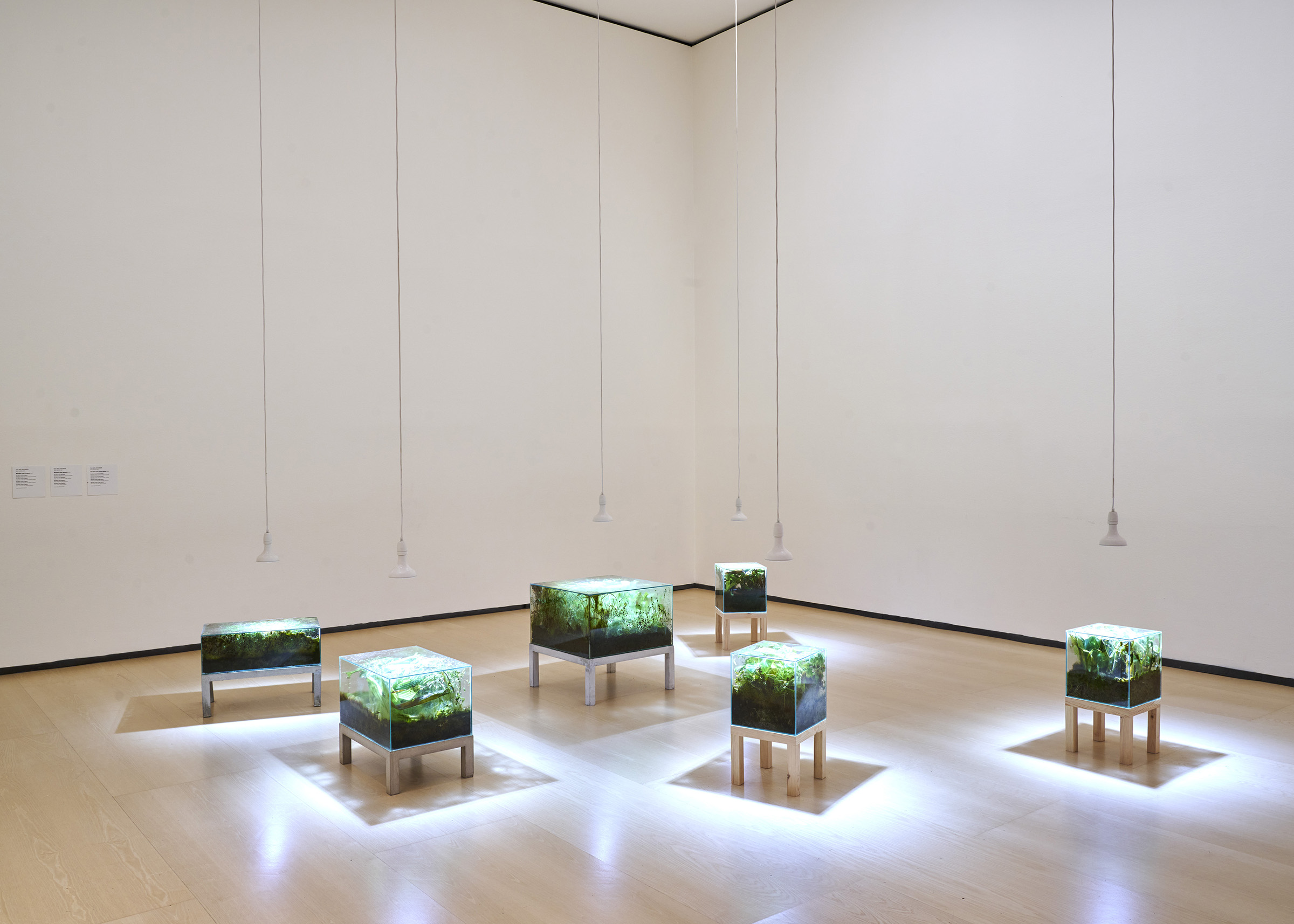
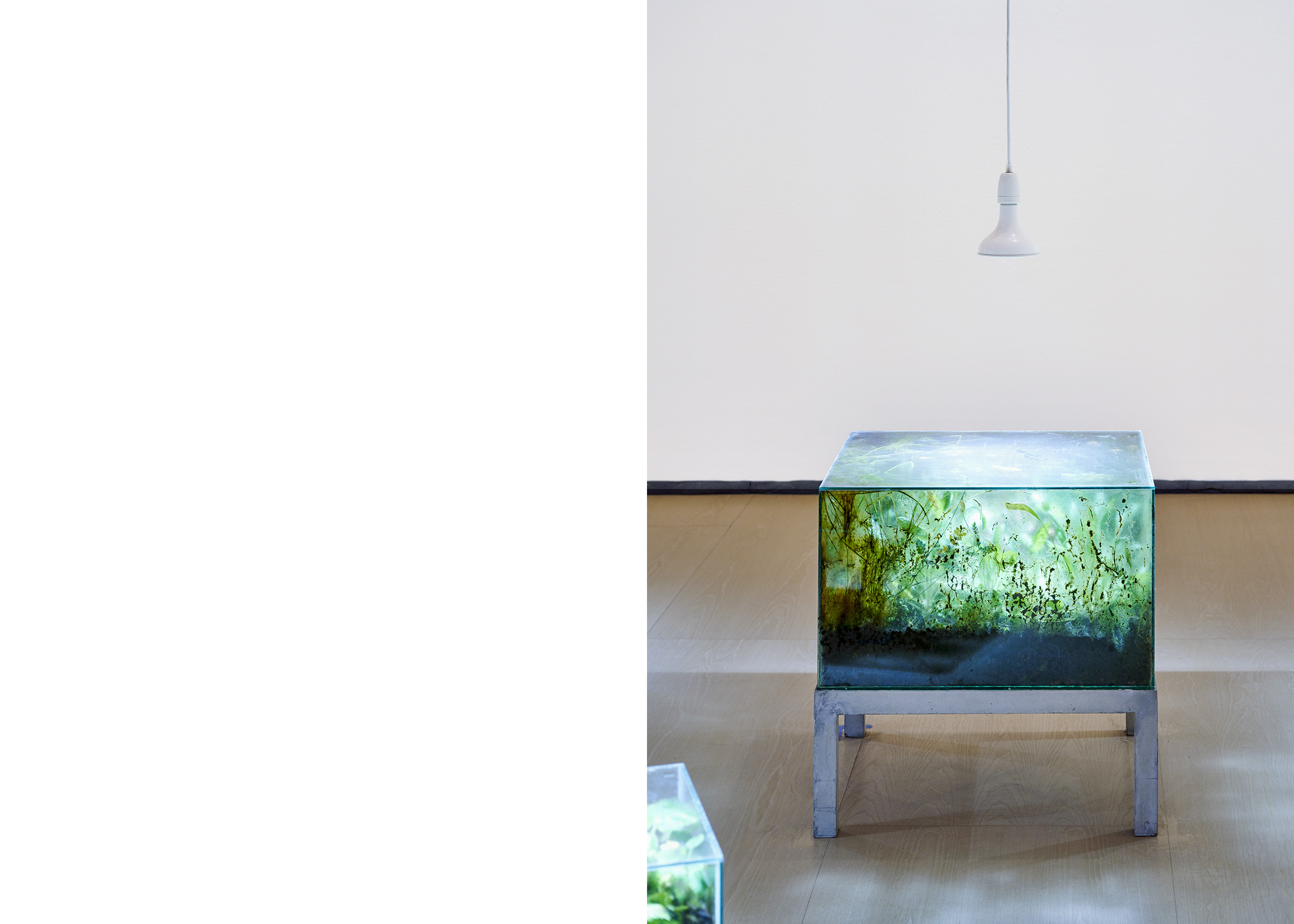
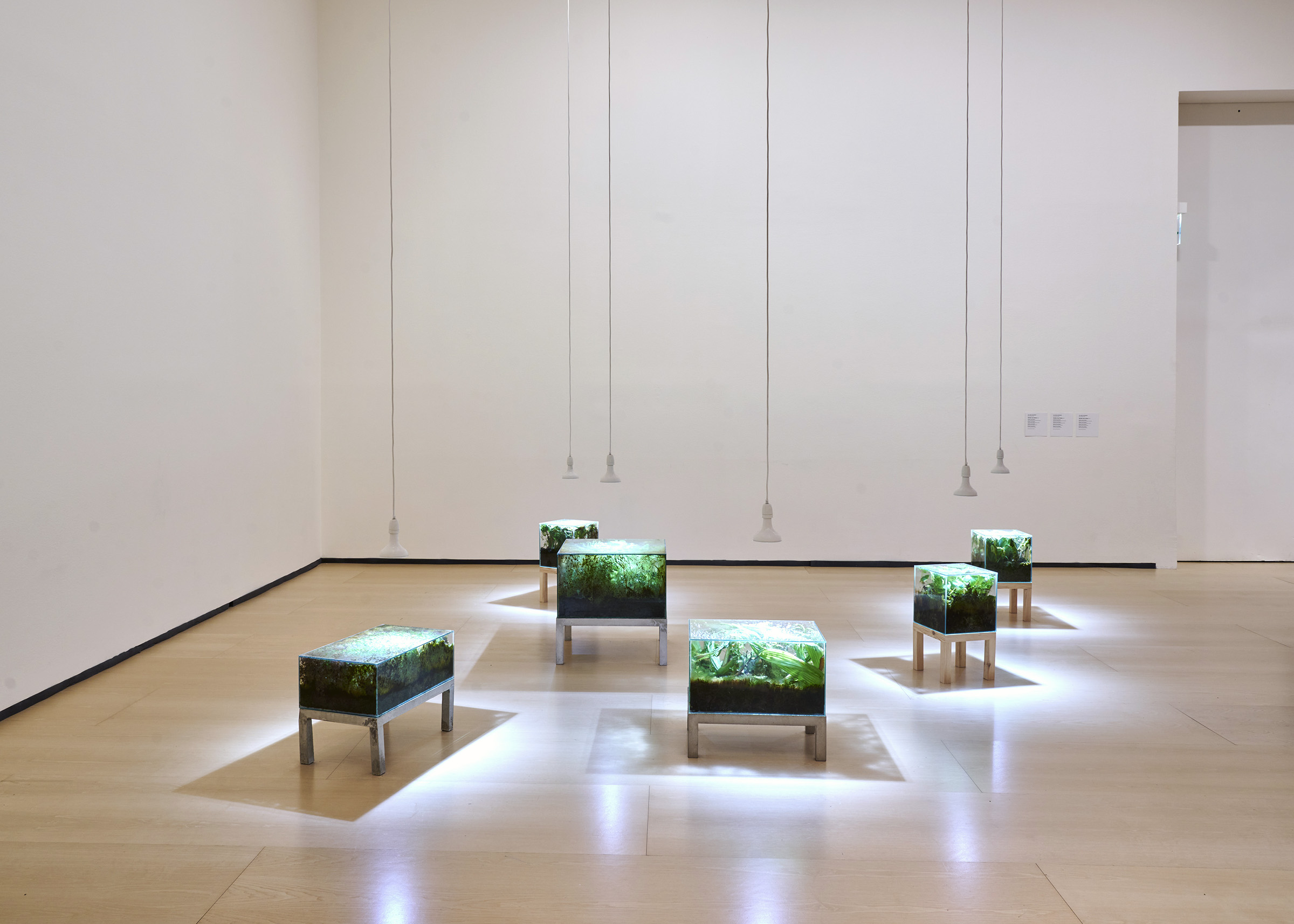
The Wardian Cases, 2012–ongoing
Text by Joanna Kamm
The English physician Nathaniel Ward revolutionized the act of plant hunting in 1830. This was a term used to describe the practices of botanists on expeditions who brought seeds and seedlings back to their homeland from faraway countries. In doing so, these men often gained fame and fortune. During the era of colonialism, objects were regularly taken without authorization, which was an integral part of European expansion. The removal of plants was a physical act of looting and also a form of symbolic violence: not only were the plants literally uprooted and traded for vast sums of money, their indigenous names were also replaced with those of the plant hunters who brought them to Europe. The specimens were essentially treated as if they had been both homeless and nameless until they were ‘discovered’ by these intruders. This ‘green gold’ – as it was known because of its high value – had to endure long sea voyages, and only a small number survived. However, this changed fundamentally when Ward invented a portable case that was subsequently named after him: a transportable mini greenhouse filled with soil and sealed airtight with a glass lid, which formed a self-contained system. The evaporation of the soil dripped back into the earth so that seeds and seedlings could germinate and grow without watering. Through this process, they were also protected from extreme climate changes. Once the plants had reached foreign lands, the hunters‘ spoils were resettled into botanical gardens. These were not just places in which people could observe new and unfamiliar specimens: above all, they were marketplaces of trade.
This starting point is precisely where Isa Melsheimer’s artistic appropriation begins. When she initiated her research process for a 2012 exhibition in Lisbon, she found that the city’s three botanical gardens reflected Lisbon’s history of colonial exploits: many expedition ships set sail from Lisbon, bringing with them devastation, conquest, appropriation, and looting. These botanical gardens can be seen as a kind of mirror of the European arrogance and hubris that defined this period – which might remain altogether hidden by the surface beauty of the gardens as one takes a pleasant afternoon stroll, were it not for labels and information boards.
Through performatively repeating the act of plundering, Isa Melsheimer has since been collecting seeds that she finds on the ground in botanical gardens – and not only in Lisbon, but also in Palermo, Madrid, and Berlin, depending on the location of this ongoing artwork and related exhibition. She becomes a plant hunter in her own right while exploring beloved and well-tended European botanical gardens. Melsheimer ignores the ban on taking seeds from these plants – given that they, too, were stolen. With the curiosity of a scientist, she then researches which plants grow from the seeds and plants them in self-designed Wardian cases. Melsheimer envisages the eponymous ‘Wardian cases’ as small modernist bungalows with frames made of concrete or wood and glass walls. This ties in directly with her interest in the interaction between nature and architecture – in Melsheimer’s scenarios, the wildness of nature often overpowers more cultivated architectural forms. This is certainly true for the Wardian cases. For a brief moment they look very beautiful, with different plants thriving within the glass and concrete cubes. They could adorn any office or apartment. However, once the process of composting begins, it is brown sludge that sticks to the glass wall instead of beautiful foliage. This is the moment for which Melsheimer waits.
A fundamental aspect of compost is that something new emerges from decay; something that humans no longer have control over, which defines the entire process taking place in a Wardian case. In an expedited version of history, it demonstrates what has taken millennia in the wild: which plants grow, which rot, which prevail. Most often, it is the fern – an ancient and primordial plant – that stands at the end of the metamorphosis. This is a reassuring sign for the artist: that despite all of these interventions and cultivation, nature will survive, and even outlive humanity. And, moreover, it can always start over again.
Ultimately, within this grand cycle of Earth’s history, Isa Melsheimer has created an ambivalent object with her cross-breeding of reappropriation and time-based readymades, which both reflects on the cruelty of colonialism and foreshadows a future for Earth without humans. It is a capsule within which time is circular.
Die Wardschen Kästen, 2012 – ongoing
Text von Joanna Kamm
Nathaniel Ward, ein englischer Arzt, revolutionierte 1830 das ‚Pflanzen jagen‘. So wurde die Tätigkeit von Botanikern auf Expeditionsreisen bezeichnet, die als Pflanzenjäger Samen und Setzlinge aus fernen Ländern mit in die Heimat brachten und damit oft Berühmtheit und Reichtum erlangten. Es ist die Zeit des Kolonialismus und ungefragte Aneignung fester Bestandteil der europäischen Expansion. Bei den Pflanzen handelte es sich sogar um eine doppelte Aneignung, nicht nur wurden die Pflanzen im wahrsten Sinne des Wortes verpflanzt und damit ein Handel in oft hohen Summen ermöglicht, sondern ihr indigener Name wurde mit dem Namen des jeweiligen Pflanzenjägers, der die Pflanze nach Europa eingeführt hatte, ersetzt – so, als ob sie heimat- und namenlos gewesen wären, bis sie von den Eindringlingen entdeckt wurden. Das ‚grüne Gold‘, wie die neu entdeckten Pflanzen aufgrund ihres hohen Wertes auch genannt wurden, musste dafür allerdings die langen Seefahrten überleben, was nur in kleiner Anzahl gelang. Dies änderte sich grundlegend, als Ward seinen nach ihm benannten Kasten erfand. Man sprach in der Botanik sogar von der Wardschen Wende, die das transportable Minigewächshaus, das auf dem Treibhauseffekt basiert, ausgelöst hat: ein mit Erde gefülltes und mit einem Glasdeckel luftdicht verschlossenes Gefäß, das ein in sich geschlossenes System erzeugt. Denn das durch die Verdunstung der Erde entstehende Kondenswasser tropft vom Glas wieder in die Erde zurück, so, dass ohne Wasserzufuhr und geschützt vor starken Klimaveränderungen, Samen und Setzlinge aufkeimen und wachsen können. In der Heimat angekommen, wurde die Beute der Pflanzenjäger in botanische Gärten umgepflanzt, die nicht nur Orte der Betrachtung des Anderen und Neuen waren, sondern vor allem Handelsplätze.
Und genau dort beginnt die künstlerische Aneignung von Isa Melsheimer. Als die Künstlerin 2012 in Lissabon für eine Ausstellung recherchierte, war für sie die historische Lage der Stadt, in der viele Expeditionsschiffe in See stachen, die eine Verwüstung von Eroberung, Kolonialismus und Aneignung nach sich zogen, in den drei botanischen Gärten der Stadt abgebildet. Ein Spiegel der europäischen Arroganz und Überheblichkeit, die beim Flanieren durch die Gärten auf den Informationsschildern nachzulesen sind.
Mit einer performativen Wiederholung des Aktes der Plünderung, sammelt Isa Melsheimer seitdem Samen, die sie auf dem Boden in botanischen Gärten findet, und dies nicht nur in Lissabon, sondern je nach Ausstellungsort auch in Palermo, Madrid oder Berlin. Sie wird zur Pflanzenjägerin in den geschätzten und gepflegten europäischen botanischen Gärten, ignoriert das Verbot, Samen der ursprünglich gestohlenen Pflanzen mitzunehmen, und erforscht mit der Neugierde einer Wissenschaftlerin, welche Pflanzen daraus wachsen, wenn sie diese in eigen entworfene Wardsche Kästen einpflanzt. Die titelgebenden „Wardsche Kästen“ gestaltet sie, als ob es kleine modernistische Bungalows wären, Gestell und Boden aus Beton oder Holz mit Seitenwänden und Dach aus Glas. Dies knüpft direkt an ihr Interesse an der Interaktion von Natur und Architektur und in ihren Szenarien überwuchert die wilde Natur oft die kultivierte Architektur. Und so ist es auch bei den Wardschen Kästen, für eine Zeit lang sehen sie sehr schön aus, unterschiedliche Pflanzen gedeihen in den Glasbetonkuben, die jedes Büro und jede Wohnung schmücken würden, bis die Kompostierung beginnt und statt schönem Grün brauner Matsch an der Glaswand klebt.
Dies ist der Moment, auf den die Forscherin Isa Melsheimer gewartet hat, denn eine grundlegende Eigenschaft von Kompost ist, dass etwas Neues entstehen kann, etwas, das die Menschen nicht mehr unter Kontrolle haben, so wie den kompletten Prozess, der in einem Wardschen Kasten abläuft, sobald er verschlossen wird. In einem Schnelldurchlauf führt er vor, was in der freien Natur Jahrtausende gedauert hat: welche Pflanze wächst, welche verrottet, welche sich durchsetzt. Meist ist es der Farn, die Urpflanze, der am Ende der Metamorphose steht. Ein beruhigendes Zeichen für die Künstlerin, dass die Natur bei all den Eingriffen und der Kultivierung, diese und die Menschheit an sich überleben wird. Und immer wieder von vorne beginnen kann.
In diesen großen Kreislauf der Geschichte der Erde hat Isa Melsheimer mit ihrer Kreuzzüchtung aus Rückaneignung und zeitbasiertem Readymade ein ambivalentes Objekt geschaffen, das sowohl auf die Grausamkeit des Kolonialismus zurückblickt als auch die Zukunft der Erde ohne Menschen vorhersagt. Eine Kapsel, in der sich die Zeit im Kreis dreht.